
Ash from Canada’s wildfires is bad for our health
by Kate Enderlin
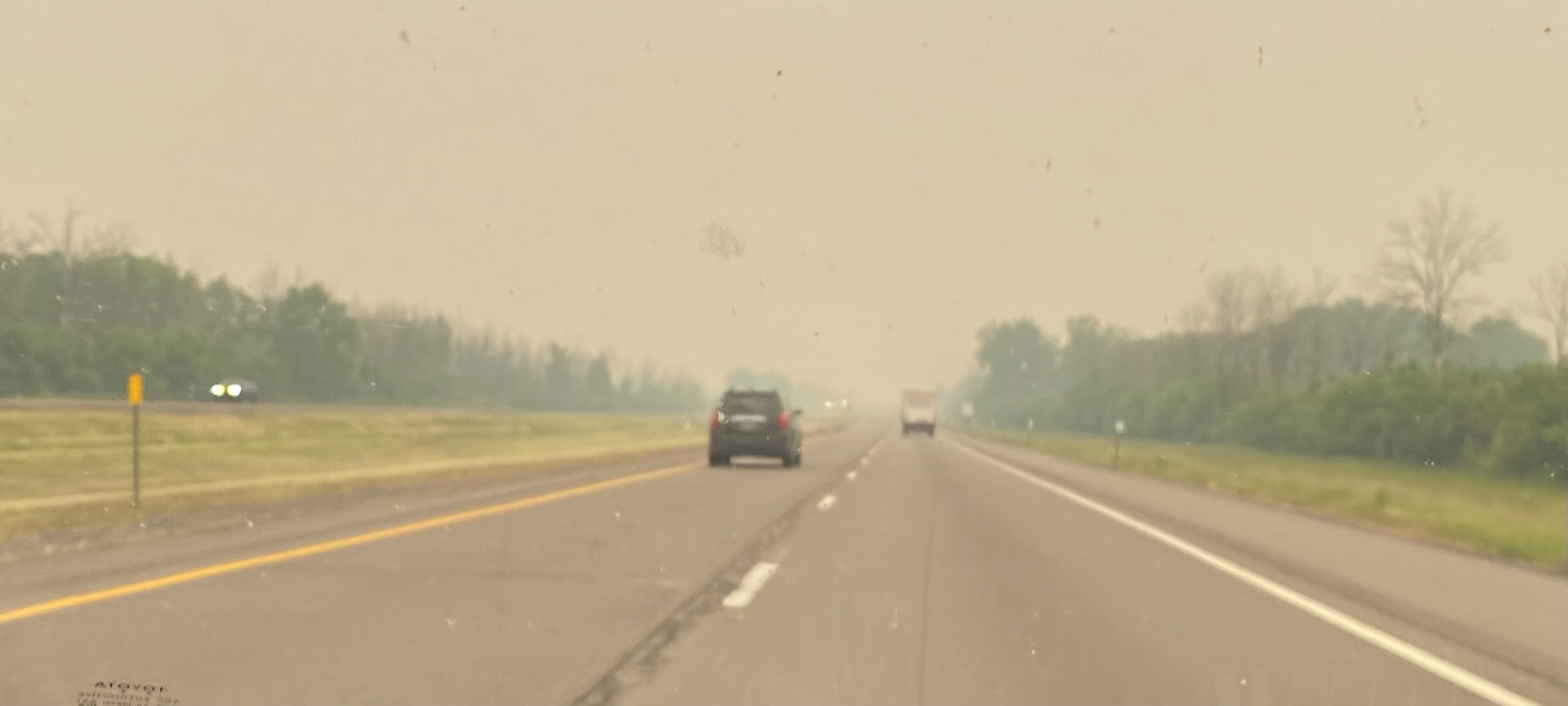
Wildfire smoke is upon us again. Almost a month ago, on June 7, I drove from Rochester, NY, to Salem. On the New York State Thruway, thick smoke hung in the air; I smelled it, even though my car windows were closed. All the way to Albany the skies were gray, the sun a yellow orb not projecting any warmth or shadows. The trees and shrubs on the sides of the road were a muted green and looking ahead into the distance everything appeared as shades of gray. Soon my eyes and throat felt irritated. This dreary scene continued mile after mile, hour after hour, the result of Quebec’s wildfires.
We face a crisis that can be solved only through global, national, state, and local action. We must reduce our use of fossil fuels and move quickly toward an economy driven by clean renewable energy.
As I drove, I wondered, Is this really what we want for our future? This was so different from my drive to upstate New York a week earlier: powder blue cloudless skies, bright sunshine, various shades of green on both sides of the Interstate, and fresh clean air to breathe.
What would it be like to live in this environment all the time? Asthma and other lung diseases would be more prevalent. Outside jobs would be difficult without protective gear. Crops might have to be moved indoors. As I considered these outcomes, my mood matched the gloomy landscape. I realized action is the only antidote. We cannot continue to poison the earth with fossil fuels: the consequences are obvious.
We face a crisis that can be solved only through global, national, state, and local action. We must reduce our use of fossil fuels and move quickly toward an economy driven by clean renewable energy. And as we make this transition, it must benefit everyone. There should be no sacrifice zones, no “collateral” damage among workers or communities that supply resources or host new infrastructure.
Salem can chart a path forward with its new offshore wind terminal. The developers should negotiate a Community Benefits Agreement with community stakeholders – all businesses involved in the project, city government, and all residents – so that there is no collateral damage. A coordinated effort will ensure clean energy production that is efficient and equitable.
Since offshore wind is new to the United States, Salem has the opportunity to set a precedent for others to follow. A new road to clean, equitable renewable energy. This is a future that we should be working toward!
Editor’s note: A shorter version of this post appeared as a letter to the editor in the Salem News, June 21.
Kate Enderlin is a member of the SAFE board and active in the North Shore node of 350 Mass.