
Project Maple would expand fracked gas capacity in Salem
by Karen Kahn
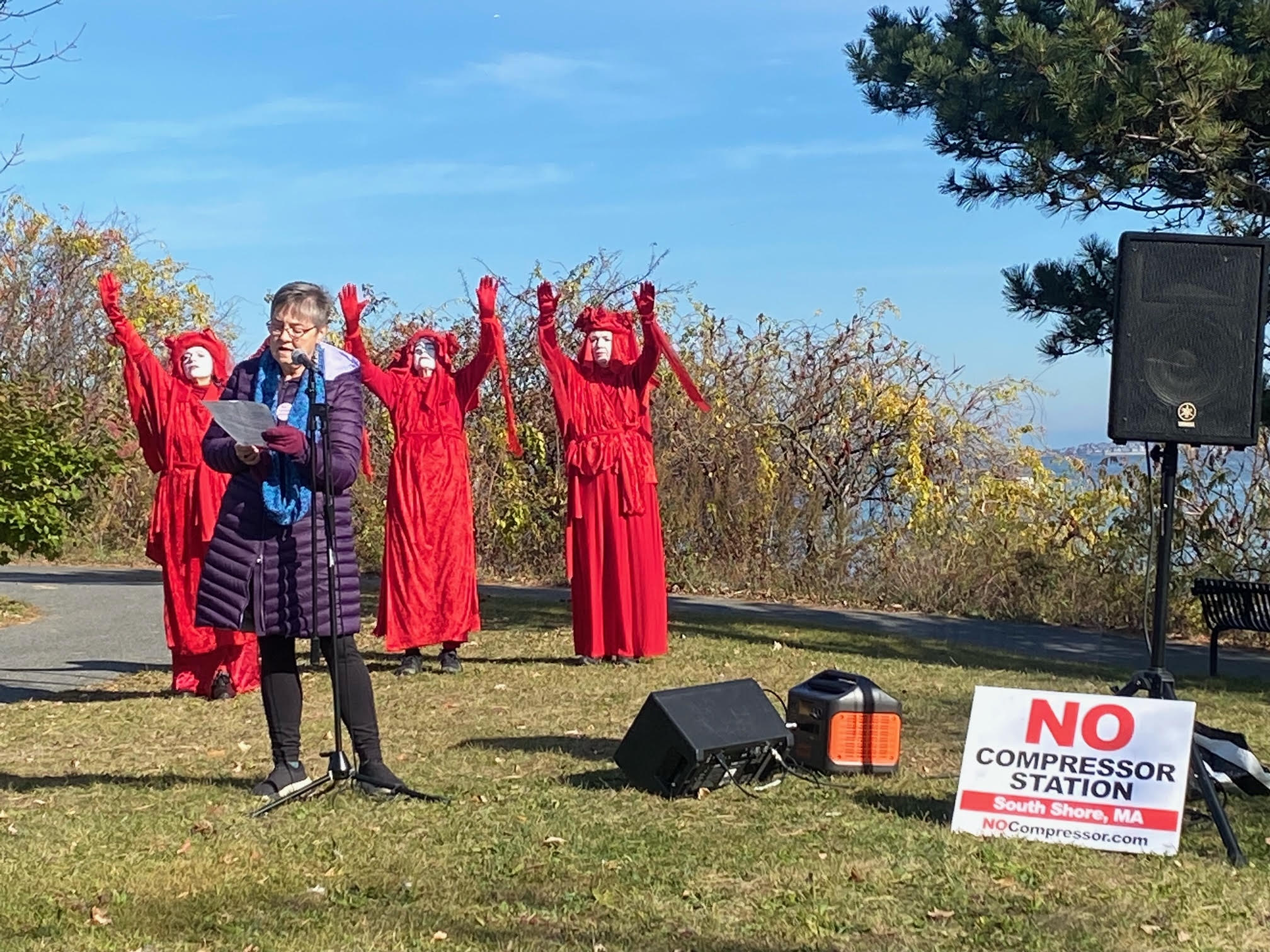
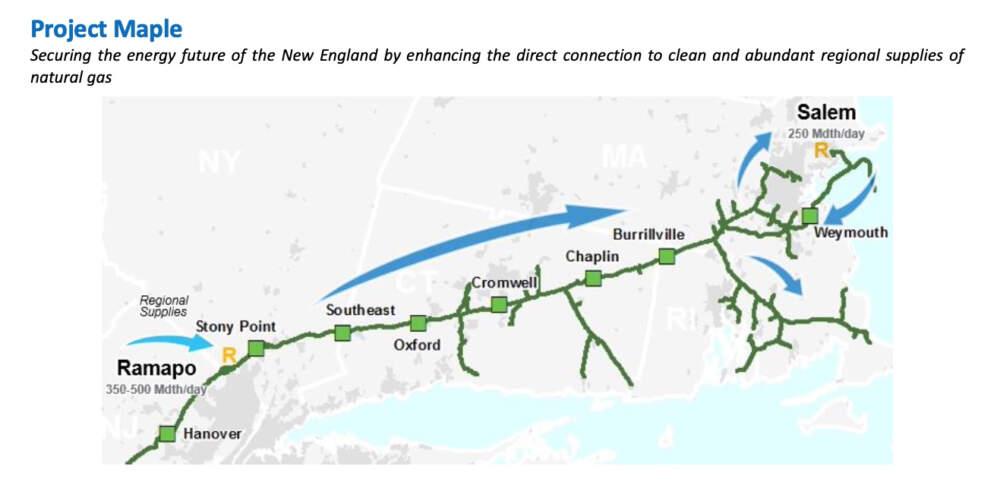
On November 15, environmental activists gathered in Weymouth, near the site of Enbridge’s compressor station, to protest expanding fracked gas capacity in the Northeast. Organized by FRRACS (Fore River Residents Against the Compressor Station), the demonstration was one of several taking place in New York, Connecticut, Rhode Island and Massachusetts, opposing Project Maple, an expansion of the Enbridge Algonquin Transmission Pipeline from New Jersey to Salem (see photos below).


Demonstrations opposing Project Maple took place in Massachusetts, New York, Connecticut, and Rhode Island.
Project Maple
Natural gas is measured in “dekatherms.” Currently, the Algonquin pipeline carries 3 million dekatherms per day. The new proposal would add 500,000 dekatherms at Ramapo, NY, and another 250,000 dekatherms in Salem, a substantial increase. To achieve its goals, Enbridge says it will be replacing some existing pipes with larger capacity pipes, adding secondary pipelines alongside existing pipes, and adding compressor capacity.
According to Enbridge, the additional gas would help relieve shortages in New England. But activists dispute this, arguing that this gas will be exported to Canada and Europe, providing little or no benefit to the communities affected by the expansion.
No More Fossil Fuels
From drilling to transmission to burning, fracked gas has proved damaging to human health while also contributing to the greenhouse gasses that are driving the climate emergency. Every state through which the pipeline runs, including Massachusetts, has committed to deep carbon emissions reductions by 2050. SAFE, Sierra Club, FRAACS and other environmental groups are putting out a clear message: expanding fossil fuel infrastructure will not achieve those goals.
Nathan Philips, a Boston University professor who worked with SAFE to map Salem’s natural gas leaks, called the project “odious” in an interview by WBUR. He said, the Northeast doesn’t “need the extra capacity that [Enbridge] is calling for.”
After a summer of extreme weather events of the sort climate scientists have been warning of, Gillian Giannetti, a senior lawyer with the watchdog group The Sustainable FERC Project, told WBUR, “This is not the time to casually add more fossil fuel capacity.” SAFE, which has made stopping fossil fuel expansion one of its priorities, agrees.
This is not the first time, environmental activists have opposed expansion of the Enbridge Algonquin Transmission Pipeline. Courtney Williams, a scientist, activist, and founder of Safe Energy Rights Group who attended a demonstration in Peekskill, reminded everyone, “We fought the AIM expansion, then the Atlantic Bridge expansion, then the Access Northeast expansion, and now they want to come back again for the fourth time in 10 years for another expansion? We want renewable energy, not more fracked gas.”
According to FRAACS, Governor Maura Healy stated in an interview on WGBH’s Boston Public Radio (September 26, 2023), that she is committed to “no new fossil fuel power plants, no new fossil fuel transmission lines.” She said, “We don’t want any of those pipelines.” At SAFE, we intend to make sure the governor uses her position to protect our communities from this project—and any other misguided fossil fuel infrastructure expansion.
Karen Kahn is a member of the SAFE Board of Directors.