
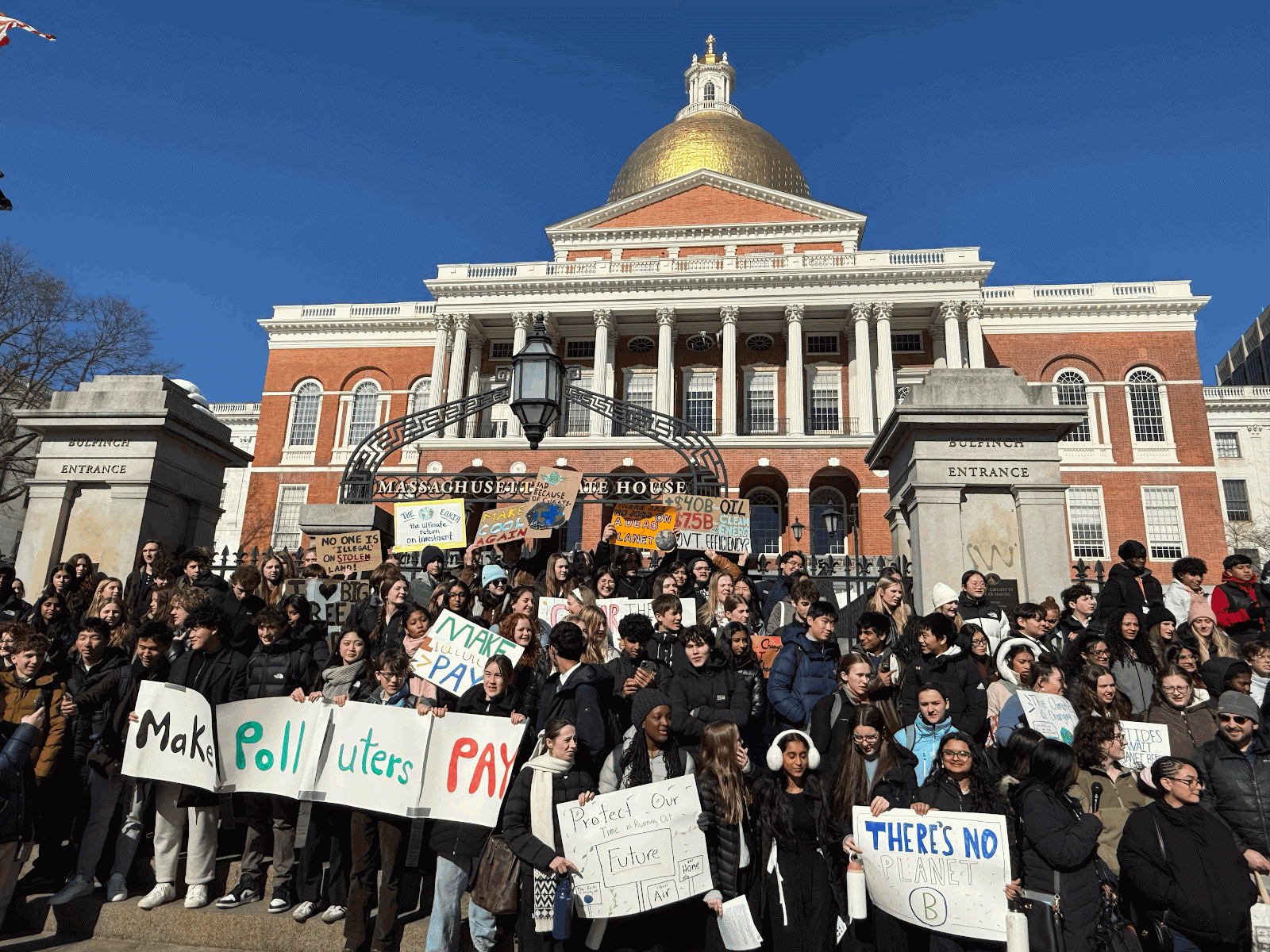
The Salem High School (SHS) Environmental Club attended the Massachusetts Youth Climate Coalition’s (MYCC) Advocacy Day, a youth-led event that gathers students across Massachusetts to march in solidarity to the Statehouse and speak directly to their legislators about priority climate action bills.
By Rylan workman
The Salem High School (SHS) Environmental Club attended the Massachusetts Youth Climate Coalition’s (MYCC) Advocacy Day 2026 on Thursday, February 12th. Advocacy Day is a youth-led event that gathers students across Massachusetts to march in solidarity to the Statehouse and speak directly to their legislators about priority climate action bills. Through Advocacy Day, MYCC aims to inspire youth climate action, build a network of passionate environmental advocates, and advance youth-designed climate legislation.


Advocacy Day 2026 may have been a day-long event, but the planning has taken many months. As I (Rylan Workman, SHS Environmental Club President and MYCC Steering Member) write this blog, I am reminded of the countless nights and hours spent making this event possible. We had split our coalition leaders into three groups: Policy and Funding, Organization, and Outreach. In the Policy and Funding group, we requested financial support from local environmental justice, educational, and community-based organizations, as our fiscal partner, Our Climate, lost funding as a result of the current presidential administration. We also decided on which priority bills to support. This year’s selections were…
Air Quality Bill – Reducing air pollution in districts that are disproportionately exposed through the establishment of a council, air sensors, and other solutions.
Preventing Gas Expansion Bill – Preventing the development of natural gas infrastructure in and around environmental justice (EJ) communities.
Polluter’s Pay/Climate Superfund Bill – Levies a one-time fee on the top 100 polluters in MA to be used for climate adaptation, with a portion reserved for EJ communities.
Farm to Schools Bill – Makes it easier for schools to source meals from local farmers through subsidization/incentivation.
Interdisciplinary Climate Education Bill – Aids districts in designing and implementing climate education plans throughout all subjects through the establishment of a Climate Education Advisory Council and funding assistance.
Nipmuk Lampson Brook Farm Land Back Bill – Grants the recently lease-expired Lampson Brook Farm back to the Nipmuk people, the original inhabitants of the land, as well as the New England Small Farm Institute.

I reached out to climate advocacy organizations, two of which, Mass Audubon and Undaunted K-12, contributed $500 and $250, respectively, and I want to thank them for their impactful contribution to youth climate advocacy. As for more behind-the-scenes info, MYCC hosted many Advocacy 101, Logistics, and Legislator Group meetings to prepare over 200 registrants. This event was so complex to plan, with participants being matched with a legislator, legislator meetings being scheduled, and the difficulty of funding food and organization for such a large group of students.
This year, I am very excited to say that the Salem High School Environmental Club brought a small group of students to this event. I traveled to the event alone last year, so it is so incredible to see the growth of our club. We even had members from outside of the club come to offer support. Finn, an SHS student interested in film, and I worked together on producing a short documentary from Advocacy Day 2026, and we are excited to share it at the Salem Youth Film Festival.
Special thanks to our mentor Mr. Marcoux for chaperoning this trip and supporting our club, as well as to Bonnie Bain and Salem SAFE for covering our transportation fees.

Our group met with legislators, Representative Manny Cruz’s legislative aide, and Senator Joan Lovely. Manny Cruz’s legislative aide, Venere Salzillo, was very receptive to our priority bills, and Senator Joan Lovely rushed in and out of the Senate roll call to ensure she could meet with us.
We asked her about the state of Salem’s wind energy port, and she responded, saying progress was largely frozen due to the federal government’s halt on funding wind projects. To this, we suggested the Polluter’s Pay Bill would be a great way to gather funding without relying on the federal government’s intervention.


Overall, it was such an amazing event, and I’m so happy with how it turned out. Every moment spent planning was so worth it for the chance to bring the Salem High School Environmental Club to the statehouse. Thanks again to Salem SAFE, I’m excited for what the future holds between our two organizations.