
Opportunites and Impacts for Salem and the North Shore
by Bonnie Bain
What does it mean for Salem to host a wind marshalling port? What are the opportunities? What are the potential impacts on our community? How can these be mitigated?
On September 18, 2023, SAFE was joined in SATV Studios by Eric Hines, professor of Civil and Environmental Engineering at Tufts University, and Matt Shields, lead researcher on Offshore Wind at the National Renewable Energy Lab, to address these questions and opportunities. Hadas Webb, deputy director of Browning the Green Space and a Salem resident, moderated the conversation. Webb used her expertise to frame the conversation around environmental justice.

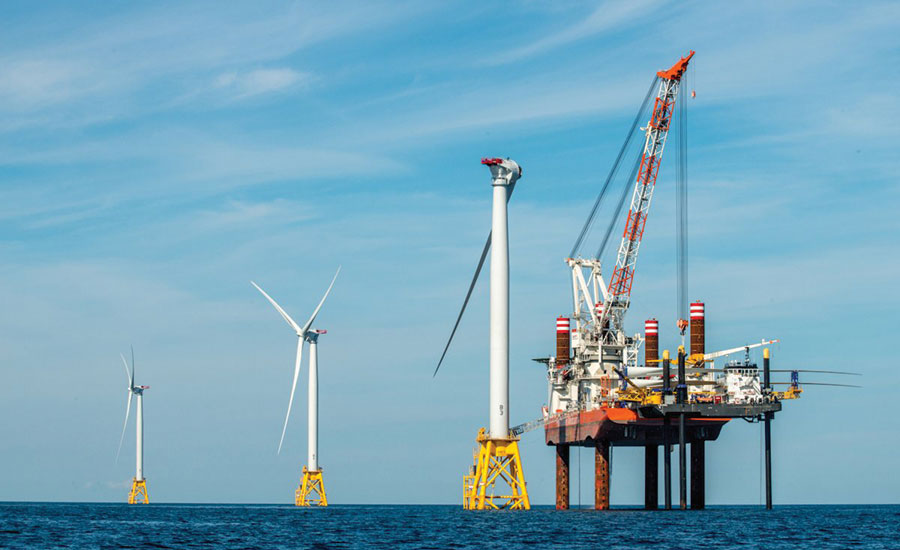
Eric Hines shared his learnings from his work developing the New Bedford Port. In particular, he emphasized the importance of leveraging a regional approach to offshore wind by considering the proximity and potential of ports such as nearby Lynn, where GE could be manufacturing wind turbine components. A regional approach to the entire supply chain could lead to far more investment and opportunity. Most interestingly, Hines shared just how large wind turbine installation vessels are and how, despite the global growth of the industry, only three exist in the world.
Importantly, Hines spoke to how we can reduce environmental impacts, particularly air pollution from diesel fumes, through port electrification. He noted, there remain some obstacles, due to readiness of the offshore wind fleet and the electric utilities. The New Bedford marshalling yard has the capacity for electrification but is not always able to use shore-to-ship power. SAFE is pushing for full electrification as soon as possible to protect our neighborhoods (learn more about port electrification here.)
Matt Shields discussed the tremendous economic opportunity that a wind marshalling port brings to the region, impressing upon us how necessary port development is to the success of the offshore wind industry nationally. In addition to the 100 or so jobs at the port, a regional supply chain will be needed to keep operations running. One interesting takeaway: the supporting supply chain opportunities could create five times as many jobs as the actual manufacture of turbine components.

Thus, there will be real opportunities for small local businesses, including those that are minority-owned and women-owned, to offer products and services. A diverse supply chain is critical to a just transition that benefits environmental justice communities.
Shield’s research is excellent for understanding the big picture of offshore wind. To learn more, we recommend the NREL Offshore Wind Market Report and A Supply Chain Roadmap for Offshore Wind in the United States.
Bonnie Bain is SAFE’s wind program manager.