
An exciting step in Salem’s clean energy transition
By Jessica Valatka
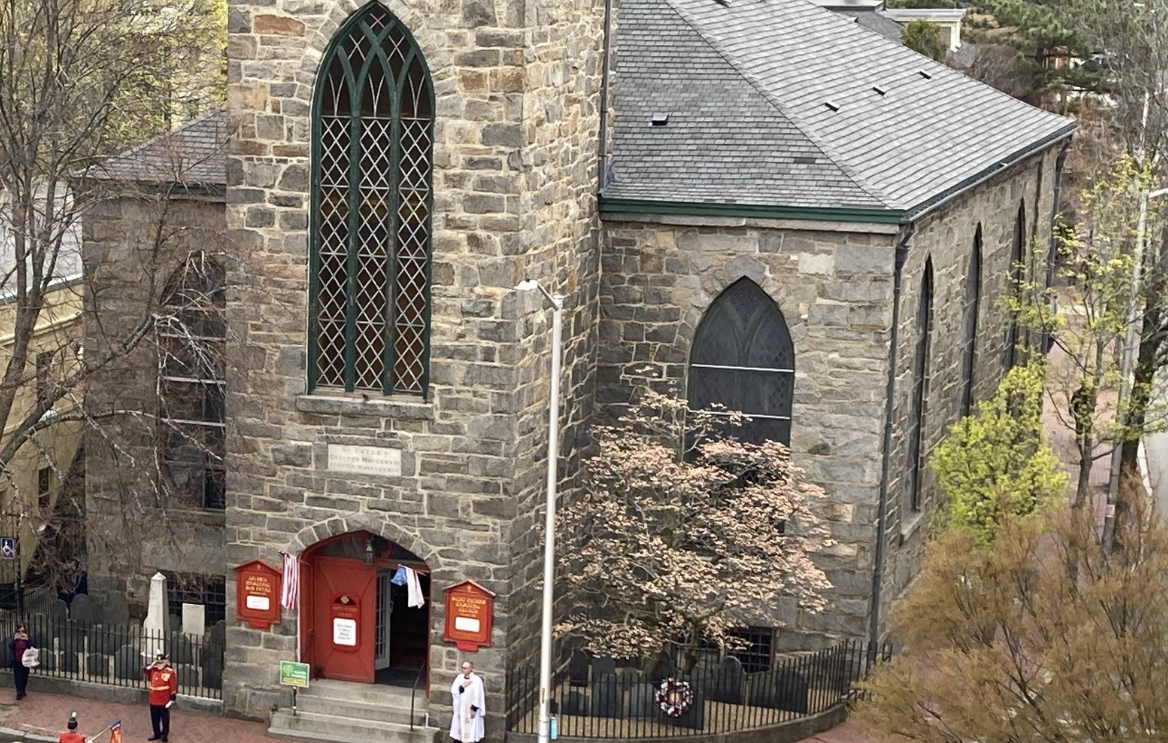
St. Peter’s-San Pedro church is one of the bilingual (English/Spanish) churches in the North Shore, and has been a staple in Salem’s history— old enough to be mentioned in Nathaniel Hawthorne’s famous novel, “The Scarlet Letter” in 1850. The original wooden church was built in 1733 and was replaced in 1833 with the present granite structure. It intersects with many events in U.S. history (read more at their website), including a connection to the Salem Witch Trials through its founder, Philip English.
Now, it may be the center of a networked geo-exchange system.
This is a very unique project that has the potential to make a bold mark in the history of the North Shore. It’s the first of its kind, and has a chance to be community-owned.
Private utilities (which are the companies that run our power systems) aim to maximize profits for shareholders through increasingly expensive prices, and don’t often fight for clean energy. In contrast, community-owned utilities are required to provide a public good. We expect that this transition could lead the way toward more clean, affordable, and equitable energy.
St. Peter’s-San Pedro church received a National Fund for Sacred Spaces grant for historic preservation that may include updating its HVAC systems. A $50k HEET grant is funding a feasibility study that will determine if there can be a shovel-ready geothermal network. If the study shows feasibility, the church will apply for larger, quite larger, grants to pursue making the project a reality—not only for the church but for those interested in participating and the community at large.
Downtown networked geothermal has all the potential to impact the high end residents, the low income housing, and many city structures. There are numerous local businesses and organizations, large and small, near St. Peter’s that are involved in the study that will conclude in December.
After the study is complete and when implementation funding becomes available, the decision to have it be community owned or utility owned will be decided.
Jessica Valatka is a member of SAFE’s communications workgroup.